
On this page 9 sections
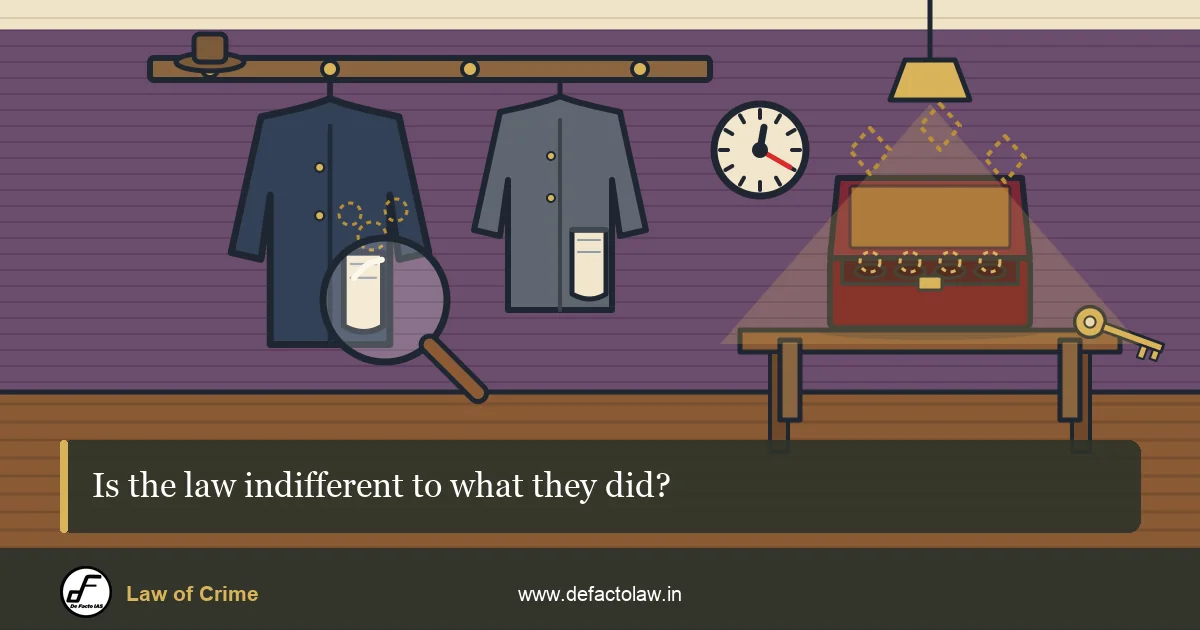
A pickpocket slips his hand into a stranger's coat pocket — only to find it empty. A thief forces open a jewel box — only to discover the jewels were removed an hour before he arrived. Under a strict logic of consequentialism, no harm has occurred: no property has been stolen, no victim has suffered a tangible loss.
Yet both men had formed the identical criminal intention, made identical preparations, and taken identical steps as they would have had the pocket been full or the box brimming with diamonds. Is the law indifferent to what they did? The answer, under the impossible attempt doctrine recognised in Indian criminal law, is an emphatic no.
This question — whether attempting the factually impossible can attract liability under Section 511 of the Indian Penal Code, 1860 — sits at the intersection of criminal intent, overt acts, and the purposes of punishment.
It is a question that has engaged Indian courts since the late nineteenth century and continues to hold importance for practitioners, even as the Bharatiya Nyaya Sanhita, 2023 has replaced the IPC with effect from 1 July 2024.
Cases at a glance 24
- State of Maharashtra v Mohamad Yakub
- Satvir Singh v State of Punjab
- Dwarka Das v Emperor
- Frederick Edmed Hooper v Emperor
- Aman Kumar v State of Haryana
- Koppula Venkat Rao v State of Andhra Pradesh
- Abbayanand Mishra v State of Bihar
- Om Prakash v State of Punjab
- Parsi Dass v State
- Queen Empress v Baku
- Sudhir Kumar Mukherjee v State of West Bengal
- Chittaranjan Choudhry v State of Bihar
- Gulab Singh v Emperor
- Basirbhai Mohhomedbhai v State of Bombay
- Malkiat Singh v State of Punjab
- Queen Empress v Mangesh Jivaji
- Government of Bengal v Umesh Chunder Mitter
- State v Parasmal & Ors
- State of Maharashtra v Rajendra Jawanmal Gandhi
- Kishor v State of Maharashtra
- Nathuni Sao v Md Bashir
- Zo Khuma v Union Territory of Mizoram
- Darbara Singh v State of Haryana
- Indu Bhushan Ghosh v State
Residuary Provision
Legislative Framework
The Indian Penal Code, 1860 does not define the term "attempt." It instead provides for four distinct categories of provisions dealing with attempts. The first category encompasses offences where both the commission and the attempt are treated in a single provision with identical punishment.
The second category separately deals with attempts to commit specific offences but prescribes a different quantum of punishment. The third category criminalises the attempt to commit an act which is not itself an independent offence. The fourth — and arguably most significant — category is the residuary provision.
Section 511 of the Indian Penal Code, 1860 constitutes this residuary provision. It makes punishable every attempt to commit an offence under the IPC that is punishable with life imprisonment or imprisonment, where no specific provision for such an attempt exists elsewhere in the Code.
The punishment prescribed is imprisonment for a term extending to one-half of the longest term provided for the completed offence, or one-half of the sentence of life imprisonment, as the case may be, or with such fine as is provided for the offence, or with both.
The Hon'ble Supreme Court, in State of Maharashtra v Mohamad Yakub AIR 1980 SC 1111, affirmed that Section 511 is more in the nature of a general provision — a field-covering residuary clause — which makes it an offence to attempt to commit those offences under the IPC not separately or specifically dealt with.
It is not confined to offences punishable with death; the provision makes punishable all attempts to commit offences prescribed under the IPC which are punishable with life imprisonment or imprisonment. In Satvir Singh v State of Punjab AIR 2001 SC 2828, the Hon'ble Court underscored that the policy underlying Section 511 is predominantly to function as a residuary provision.
A critical limitation of Section 511 must be noted at the outset: the provision does not apply to offences under special or local laws (Dwarka Das v Emperor (1946) ALL WR (HC) 566).
However, as held in Frederick Edmed Hooper v Emperor AIR 1917 Mad 937, the provision and its illustrations may be used as an analogy in determining what would constitute an attempt to commit an offence under a special law, even if it does not apply in terms to such cases.
Why Punish Attempts
Why does the law punish attempts at all? The answer was articulated with precision in Aman Kumar v State of Haryana AIR 2004 SC 1497: every attempt, though it falls short of success, creates alarm, which by itself is an injury, and the moral guilt of the offender is the same as if he had succeeded.
An attempted offence poses no less a danger to legally protected interests than the completed offence (Koppula Venkat Rao v State of Andhra Pradesh (2004) 3 SCC 602, AIR 2004 SC 1874).
There is an additional societal purpose. Identifying and punishing a person who poses a threat to recognised interests at the earliest feasible moment prevents the offender, with improved skill and caution, from continuing his efforts to accomplish his ill-intent until he succeeds. The logic of deterrence and incapacitation converges in the law of attempts.
Essential Elements
Before the doctrine of impossible attempt can be properly understood, it is necessary to have a clear grasp of what constitutes a criminal attempt under Indian law.
Mens Rea
The mental element of the offence of attempt is essentially the intent of a person to commit the contemplated offence. Specific intention or desire to commit a particular substantive offence — irrespective of the form of its requisite mens rea — constitutes the mens rea of the attempt to commit that particular offence (Abbayanand Mishra v State of Bihar AIR 1961 SC 1698).
The expression "whoever attempts to commit an offence" in Section 511 means, in substance, "whoever intends to do a certain act with the intent or knowledge necessary for the commission of the offence" (Om Prakash v State of Punjab AIR 1962 SC 1782).
Intention is a necessary ingredient of the offence, though intention by itself — unaccompanied by any external act — is not an offence (Parsi Dass v State AIR 1953 J&K 19). The law does not take notice of a mere intention without an act (Queen Empress v Baku (1899) ILR 24 Bom 287).
Critically, mens rea is generally inferred from acts done by the person accused of attempt towards the commission of the substantive offence, and his foresight of consequences reflected in those acts (Abbayanand Mishra v State of Bihar AIR 1961 SC 1698).
Actus Reus
Mere intention, however firm, does not suffice. The act constituting an attempt need not be the penultimate act towards the commission of the offence, but it must be an act done during the course of committing that offence (Abbayanand Mishra v State of Bihar AIR 1961 SC 1698).
It is enough if the act is something more than merely preparatory to the commission of the intended offence (Sudhir Kumar Mukherjee v State of West Bengal AIR 1973 SC 2655). The term "any act" in Section 511 excludes the notion that only the final act short of actual commission is punishable (In re R MacCrea (1893) ILR 15 All 173).
The burden rests on the prosecution to prove that the accused had initiated certain steps which had clearly reached such a point that the acts themselves indicated the likely end towards which they were directed (Chittaranjan Choudhry v State of Bihar AIR 1987 SC 856).
It is not sufficient to justify a conviction by basing findings on surmise or opinion that the accused probably committed the offence (Gulab Singh v Emperor AIR 1916 All 141 (DB)).
Proximity Test
For an act to constitute the actus reus of an attempted offence, it must be sufficiently proximate — and not merely remotely connected — to the commission of the intended offence. The measure of proximity, as the Hon'ble Supreme Court made plain in State of Maharashtra v Mohamad Yakub AIR 1980 SC 1111, is not in relation to time and action but in relation to the intention.
The act must reveal, with reasonable certainty, in conjunction with other facts and circumstances (and not necessarily in isolation), an intention — as distinguished from a mere desire or object — to commit the particular offence.
An attempt to commit an offence may be said to begin when preparations are complete and the culprit commences to do something with the intention of committing the intended offence and which is a step towards it (Abbayanand Mishra v State of Bihar AIR 1961 SC 1698).
Preparation vs Attempt
The distinction between preparation and attempt is thin but real, carrying serious penal consequences for the accused (Abbayanand Mishra v State of Bihar AIR 1961 SC 1698). If his act falls within preparation, he is free from liability for his conduct; if it goes beyond, he is not. An attempt begins where preparation ends (Basirbhai Mohhomedbhai v State of Bombay AIR 1960 SC 979).
Preparation consists in devising or arranging the means or measures necessary for the commission of the offence. An attempt, by contrast, is a direct movement towards commission after preparations are made (Malkiat Singh v State of Punjab AIR 1970 SC 713).
The difference between the two stages consists chiefly in the greater degree of determination (Koppula Venkat Rao v State of Andhra Pradesh (2004) 3 SCC 602). Courts have uniformly held that whether a certain act amounts to an attempt or preparation is a question of fact dependent on the nature of the act and attending circumstances (State of Maharashtra v Mohamad Yakub AIR 1980 SC 1111).
The Core Question
Three Forms
A person who has done everything within his reach may fail to commit the intended offence, not because of any unforeseen or sudden interruption, but because it was impossible for him to commit it in the first place. His failure is attributed not to external interruptions but to circumstances that make the contemplated act impossible. Such impossibility takes three distinct forms:
- (i) Factual or physical impossibility — the object of the crime does not exist or the circumstances have rendered its commission physically impossible (e.g., attempting to steal from an empty box or an empty pocket).
- (ii) Impossibility due to ineptitude — the accused lacks the requisite ability or means to accomplish the offence, even though the object exists (e.g., attempting to commit a fraud using an instrument so crude it could deceive no one).
- (iii) Legal impossibility — the act the accused attempts to commit is not, in law, a criminal offence, even if the accused mistakenly believes it to be so.
Indian law's treatment of these three forms — particularly the first two — is informed primarily by the illustrations appended to Section 511 and by a consistent line of judicial authority.
Empty Box, Empty Pocket
There is no specific provision in the Indian Penal Code, 1860 that expressly deals with an attempt to commit an impossible act. Even Section 511 itself is silent on the point. However, both illustrations appended to Section 511 are instructive — indeed, decisive.
Both illustrations posit a scenario where 'A' is guilty of attempting to steal: in the first illustration, he attempts to steal jewels from an empty jewel box; in the second, he attempts to pick valuables from the empty pocket of another.
In both cases, the commission of the substantive offence of theft was factually impossible — the jewels did not exist in the box, and there was nothing in the pocket. Yet both illustrations record a finding of guilt.
The conclusion drawn from these illustrations, as upheld in Queen Empress v Mangesh Jivaji (1887) ILR Bom 376, is categorical: impossibility of a thing will not absolve the criminal liability of the person committing an act.
Governing Principle
The governing principle in Indian criminal law — as revealed by the illustrations and confirmed by the courts — is that the factual impossibility of completing the intended offence does not, of itself, negate criminal liability for the attempt.
What matters is not whether the crime could in fact have been accomplished, but whether the accused had formed the requisite intention, made preparations, and done an overt act towards its commission.
This approach aligns with the moral guilt theory articulated in Aman Kumar v State of Haryana AIR 2004 SC 1497: the moral guilt of the offender is the same whether or not the attempt was capable of succeeding.
A person who thrusts his hand into an empty pocket with the intent to steal is morally as guilty as one who successfully picks a full one. Failure in the attempt is irrelevant in considering whether the accused had committed the offence of attempting to commit the crime (Government of Bengal v Umesh Chunder Mitter (1888) ILR 16 Cal 310).
Judicial Pronouncements
Mangesh Jivaji
The foundational case in Indian jurisprudence on impossible attempt is Queen Empress v Mangesh Jivaji (1887) ILR Bom 376, decided by the High Court of Bombay. The court, in construing the illustrations to Section 511, held that an attempt to steal from an empty receptacle constituted a punishable attempt under the IPC.
The impossibility of accomplishing the theft — because there was nothing to steal — did not shield the accused from criminal liability. The court reasoned that the two illustrations expressly embody the legislative intent to punish impossible attempts; the IPC draftsmen were fully aware of the impossibility embedded in the illustrations yet included them as examples of criminal liability.
This early pronouncement established the framework within which all subsequent Indian decisions on impossible attempt have operated.
Umesh Chunder Mitter
Government of Bengal v Umesh Chunder Mitter (1888) ILR 16 Cal 310 extended the principle of impossible attempt beyond the context of theft to the offence of cheating. The Calcutta High Court held that a man may attempt to cheat, although the person he attempts to cheat is forewarned and is therefore not cheated.
The fact that the intended victim was put on guard — rendering it practically impossible for the deception to succeed — did not extinguish criminal liability for the attempt. The court underscored that failing in the attempt is irrelevant in considering whether the accused had committed the offence of attempting to commit the crime.
The significance of this decision extends beyond its facts. It confirms that the principle of impossible attempt is not confined to property offences but applies across the spectrum of offences. The forewarning of the victim — which creates a situation not unlike the empty pocket — does not supply the accused with a defence.
Aman Kumar
The most authoritative exposition of criminal attempt under Section 511 — encompassing the impossible attempt doctrine — comes from the Hon'ble Supreme Court in Aman Kumar v State of Haryana AIR 2004 SC 1497.
While the case primarily concerned attempt to commit rape, the Supreme Court's comprehensive analysis of Section 511 and the general principles of criminal attempt constitutes binding authority on impossible attempts as well.
The court observed that an attempt to commit an offence is an act or a series of acts which leads inevitably to the commission of the offence unless something, which the doer of the act neither foresaw nor intended, happens to prevent it.
Crucially, the court re-emphasised that the moral guilt of the offender is the same whether the attempt succeeds or fails. The attempt is punishable because it creates alarm, which is itself an injury, and because the offender's criminal design is fully formed and acted upon.
Equivocality Test
Courts have employed several tests to determine whether a given act constitutes an attempt or a mere preparation. Among these, the equivocality test — sometimes described as a continuation of the proximity test and the doctrine of locus poenitentiae — is particularly relevant to impossible attempts.
The equivocality test, as articulated in State v Parasmal & Ors AIR 1969 Raj 65, holds that an act towards the commission of the offence amounts to an attempt if, and only if, it unequivocally indicates that the intention of the doer was to accomplish the criminal object. The act must clearly indicate his desire to translate the intention into action.
In impossible attempt cases, the equivocality test operates with particular clarity. When an accused is caught with his hand in an empty pocket, the act unequivocally indicates an intent to steal: there is no innocent explanation for reaching into another's pocket.
When a man forces open a jewel box with a duplicate key, that act unequivocally demonstrates an intent to steal its contents. The fact that the pocket was empty or the box bare does not introduce any equivocation into the intention — it remains firmly and singularly directed at theft.
The equivocality test thus confirms, rather than undermines, the doctrine of impossible attempt. The impossibility of completion does not make the act equivocal; it merely explains why the substantive offence was not consummated.
Trial and Sentencing
A person may be convicted of an attempt to commit an offence even if he is charged only for the main offence and the attempt is not separately charged (State of Maharashtra v Rajendra Jawanmal Gandhi AIR 1997 SC 3986).
This is consistent with the position under the Code of Criminal Procedure, 1973: when the accused is charged with the main offence, he is well aware of the allegations and accusations relating to that offence.
If during the trial, the evidence is insufficient to convict for the main offence but sufficient to convict for the attempt, the court is empowered to convict for the attempt even without a separate charge (Kishor v State of Maharashtra (1995) Cr LJ 1765 (Bom)).
The conception of an attempt to commit an offence is a technical one, and it is for the court to arrive at its conclusion as to whether there was an attempt on a consideration of the facts proved before it (Nathuni Sao v Md Bashir AIR 1953 Pat 338).
On sentencing, the court retains wide discretion. The age of the offenders and their antecedents — particularly the fact of not being habitual offenders — may be considered in mitigation (Zo Khuma v Union Territory of Mizoram (1989) Cr LJ NOC 190 (Gau)).
The question of sentence is the discretion of the court and will not ordinarily be bound by precedents (Darbara Singh v State of Haryana (1980) Cr LJ 1157 (P&H)). However, where the sentence is grossly disproportionate to the gravity of the offence, appellate courts have not hesitated to enhance it (Indu Bhushan Ghosh v State AIR 1950 All 639).
BNS Transition
With the coming into force of the Bharatiya Nyaya Sanhita, 2023 (BNS) on 1 July 2024, the Indian Penal Code, 1860 stands repealed. For practitioners and students, the central question is whether the transition has altered the law on impossible attempt.
The answer, on this point, is an unambiguous no.
Section 62 of the Bharatiya Nyaya Sanhita, 2023 is the direct counterpart of Section 511 of the Indian Penal Code, 1860. Its heading reads: "Punishment for attempting to commit offences punishable with imprisonment for life or other imprisonment."
The comparison table prepared by IPS officer Anil Kishore Yadav, Director, CAPT Bhopal, which forms an authoritative reference for BNS-IPC mapping, records the position against Section 62 BNS as: "No change."
The provision, the illustrations, and the punishment structure remain identical. This means that:
- The two illustrations to Section 511 IPC (empty jewel box; empty pocket) continue to hold legal force under Section 62 BNS.
- Every judicial precedent interpreting Section 511 IPC on impossible attempt — including Queen Empress v Mangesh Jivaji, Government of Bengal v Umesh Chunder Mitter, and Aman Kumar v State of Haryana — retains its persuasive and binding authority in proceedings under Section 62 BNS.
- The doctrine that impossibility of commission does not absolve criminal liability continues unaltered under the new Code.
The BNS renumbers the provision — from Section 511 to Section 62 — and places it within Chapter III of the new legislation, which consolidates several general provisions including criminal conspiracy (Section 61 BNS, corresponding to Sections 120A and 120B IPC). The substantive law, however, has not moved.
Practitioners should note that for offences committed on or after 1 July 2024, proceedings will be governed by the BNS, and the relevant citation will be Section 62, Bharatiya Nyaya Sanhita, 2023. For offences committed before 1 July 2024, Section 511 of the Indian Penal Code, 1860 continues to apply by operation of the savings clause.
Conclusion
The doctrine of impossible attempt represents one of the more intellectually rigorous corners of Indian criminal law.
Its core proposition — that a person who does everything within his reach to commit an offence remains criminally liable even if the offence was factually impossible — rests on a coherent set of foundations: the moral guilt of the offender is identical whether or not the crime could have succeeded; the alarm and danger created by the attempt are real; and the policy of deterring persistent criminality requires that the law intervene at the earliest feasible moment.
Section 511 of the Indian Penal Code, 1860 — now Section 62 of the Bharatiya Nyaya Sanhita, 2023 — achieves this through a residuary provision of elegant simplicity. Its two illustrations, both involving theft from empty receptacles, were not accidents of draftsmanship: they were deliberate embodiments of the legislative will to punish impossible attempts.
The High Courts of Bombay and Calcutta, as far back as 1887 and 1888, gave effect to that will in Queen Empress v Mangesh Jivaji and Government of Bengal v Umesh Chunder Mitter respectively, and the Supreme Court has reinforced the position in a series of authoritative pronouncements.
What the doctrine does not address with equal clarity is the question of legal impossibility — the scenario where the act, if completed, would not have amounted to any offence known to law. This remains an area of doctrinal uncertainty that courts and commentators continue to grapple with, and which may well require direct legislative or judicial intervention in the years ahead.
As the BNS embeds itself in Indian legal practice, advocates and courts will have the opportunity to develop this strand of the law with the same rigour that the factual impossibility strand has received over the past century and a half.
Frequently Asked Questions
Q: What is an impossible attempt under Section 511 IPC?
An impossible attempt is a situation where the accused intends to commit an offence, makes preparations, and does an overt act towards its commission, but the completion of the offence is factually impossible — for instance, because the object of the crime does not exist (e.g., an empty pocket or an empty jewel box).
Under Section 511 IPC, and its successor Section 62 BNS, such an attempt remains punishable because impossibility of completion does not extinguish the intention or the overt act.
Q: Does Section 511 IPC specifically mention impossible attempts?
Section 511 of the Indian Penal Code, 1860 does not contain any express reference to impossible attempts. However, both illustrations appended to the provision — which involve theft from an empty box and from an empty pocket — unambiguously indicate that the legislature intended impossible attempts to be punishable.
Courts have consistently relied on these illustrations to hold that factual impossibility does not provide a defence.
Q: What are the different types of impossibility recognised in Indian criminal law?
Indian criminal law recognises three forms of impossibility: (i) factual or physical impossibility, where the circumstances render the commission of the offence physically impossible; (ii) impossibility due to ineptitude, where the accused lacks the skill or means to accomplish the offence; and (iii) legal impossibility, where the act attempted is not an offence known to law.
The first two categories attract criminal liability under the principle laid down in the illustrations to Section 511 IPC / Section 62 BNS.
Q: What is the equivalent of Section 511 IPC under the new Bharatiya Nyaya Sanhita, 2023?
Section 511 of the Indian Penal Code, 1860 corresponds to Section 62 of the Bharatiya Nyaya Sanhita, 2023. The provision records "no change" — both the text and the punishment structure remain identical. All judicial precedents interpreting Section 511 IPC on criminal attempts and impossible attempts continue to be authoritative in the interpretation of Section 62 BNS.
Q: Can a person be convicted for an impossible attempt even if the charge was for the completed offence?
Yes. Under established Indian criminal procedure, a person may be convicted of an attempt to commit an offence even when only the substantive, completed offence was charged.
If the evidence adduced at trial falls short of proving the completion of the offence but is sufficient to prove the attempt, the court is fully empowered to convict the accused for the attempt — even in the absence of a separately framed charge to that effect (State of Maharashtra v Rajendra Jawanmal Gandhi AIR 1997 SC 3986).